Accessibility

Every voter should have the right to vote independently and in secret.

We know that disabled people face barriers to voting at polling stations which include:

  • not having the support they need
    when voting
  • encountering physical, visual, psychological and information barriers when voting at the polling station

Blind and partially sighted people face additional barriers because the method of voting – by making a cross in a specific location on a piece of paper – is principally a visual exercise. The Returning Officer will provide you with information about accessibility awareness as part of your training.

Having an awareness and understanding of the barriers to voting will help you provide support to voters at the polling station. 

Remember:

  • not all disabilities are visible – for example neurodivergence or hidden disabilities like mental health conditions
  • some voters may have more than one impairment – for example, a visual impairment and dementia
How can polling staff help support voters?

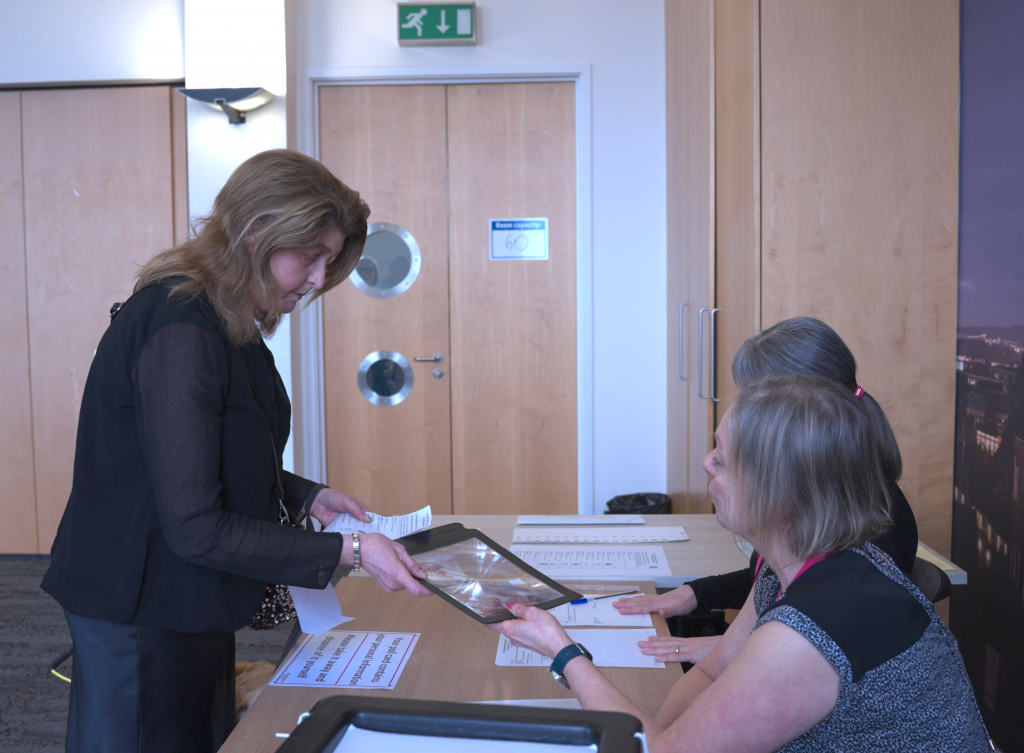
You can help by considering the needs of the person, not just a specific disability. 

Be aware of any permitted adjustments that may help the voter cast their vote safely

By communicating clearly the process of voting – for example, if the voter asks a question about information on a notice, provide an explanation rather than directing them to read the notice

Communicate that assistance is available if required (recognising that not all conditions or impairments are visible)

Ensure that voters are aware of how to use any equipment provided to support voters

Make sure that voters are aware that they may request the assistance of a companion. The companion can assist up to two people at the same election. The disabled voter’s companion must be either a close relative (father, mother, brother, sister, spouse, civil partner, son or daughter – if they are aged 16 years or over) or a qualified elector.

Equipment provided at the polling station to support voters

The Returning Officer has provided each polling station a range of equipment to help make it easier for voters to vote independently and in secret.

Visually impaired voters

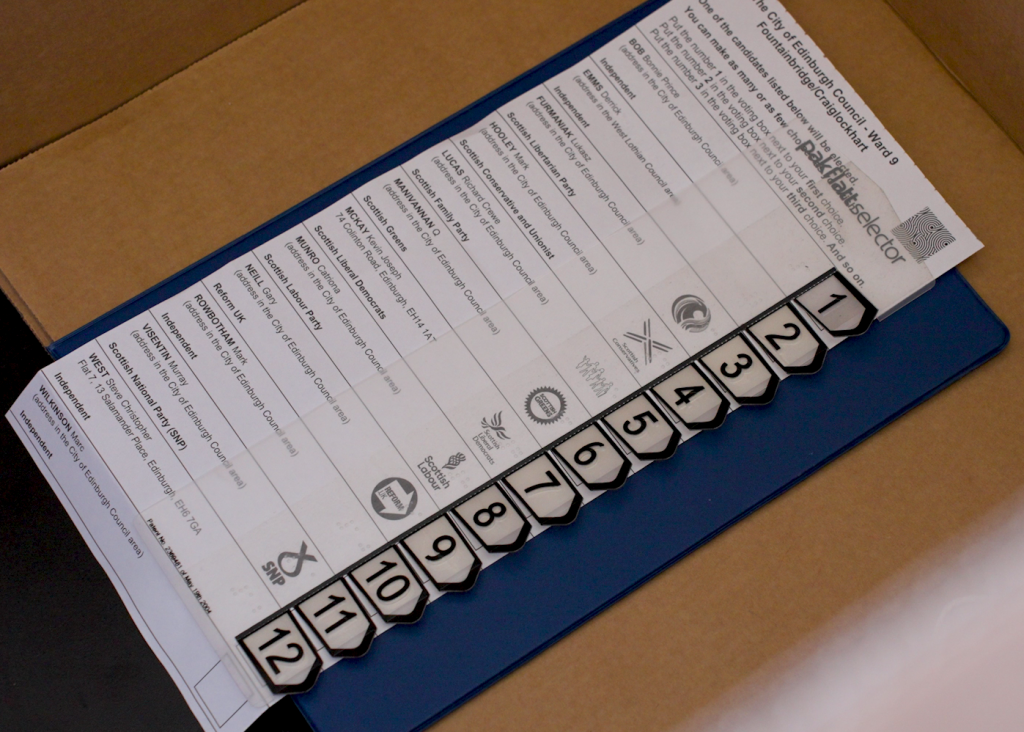
Tactile voting device

For visually impaired voters we have a tactile voting device you can offer. 

If the voter opts to use the tactile voting device,  in the privacy of the ballot booth, the voter should:

  • lift the selected window
  • mark their preferences on the ballot paper
  • close the windows
  • separate the template from the ballot paper
  • fold and place the ballot paper in the ballot box

This process needs to be followed for each ballot paper issued.

Braille overlay 

The braille overlay was first used in the recent Scottish Parliament election and has been brought back for this election. The overlay is used alongside audio and is available at every polling station across the two wards. 

Click play to see how this looks from a voters point-of-view

Enlarged hand-held copy of ballot paper

This can be given to voters who are partially sighted to take into the ballot booth for reference when marking the official ballot paper

Large print ballot papers

Large print sample copies of the ballot paper displayed inside the polling station to assist voters who are partially sighted and also voters who would like some time to look the ballot paper before entering the polling booth

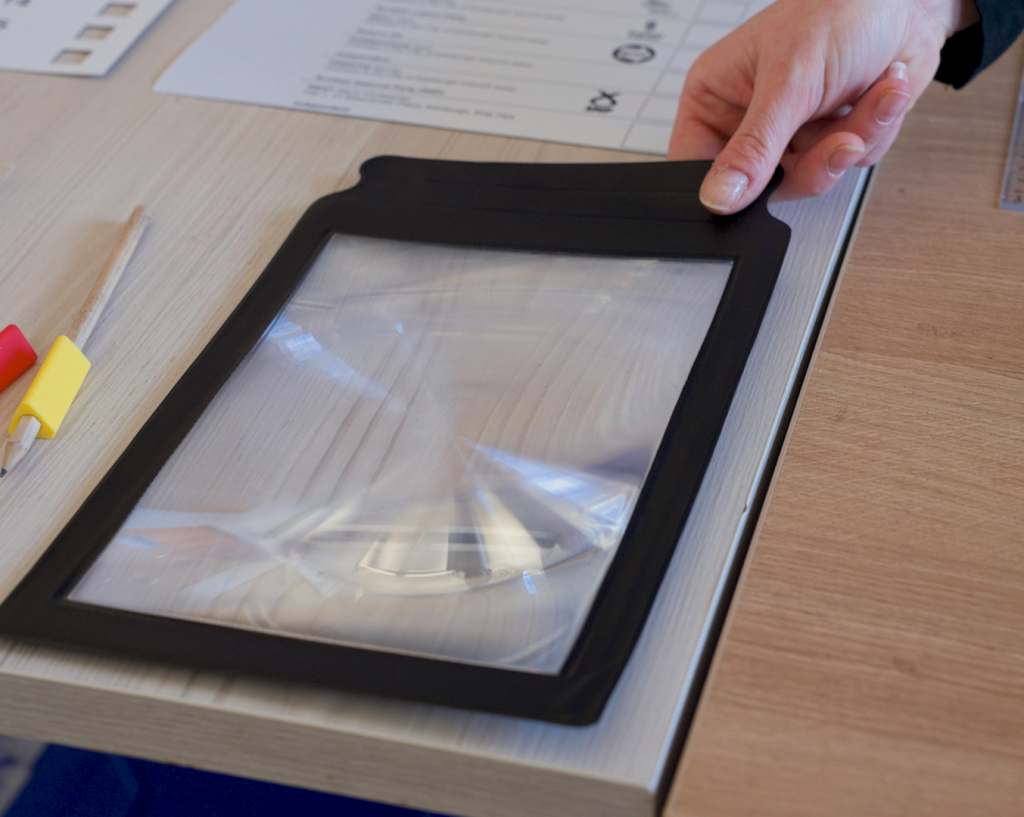
Magnifying sheet

These increase the size of the text on a document, providing support for voters who are visually impaired to vote independently.

Accessible voting: Supporting a visually impaired voter

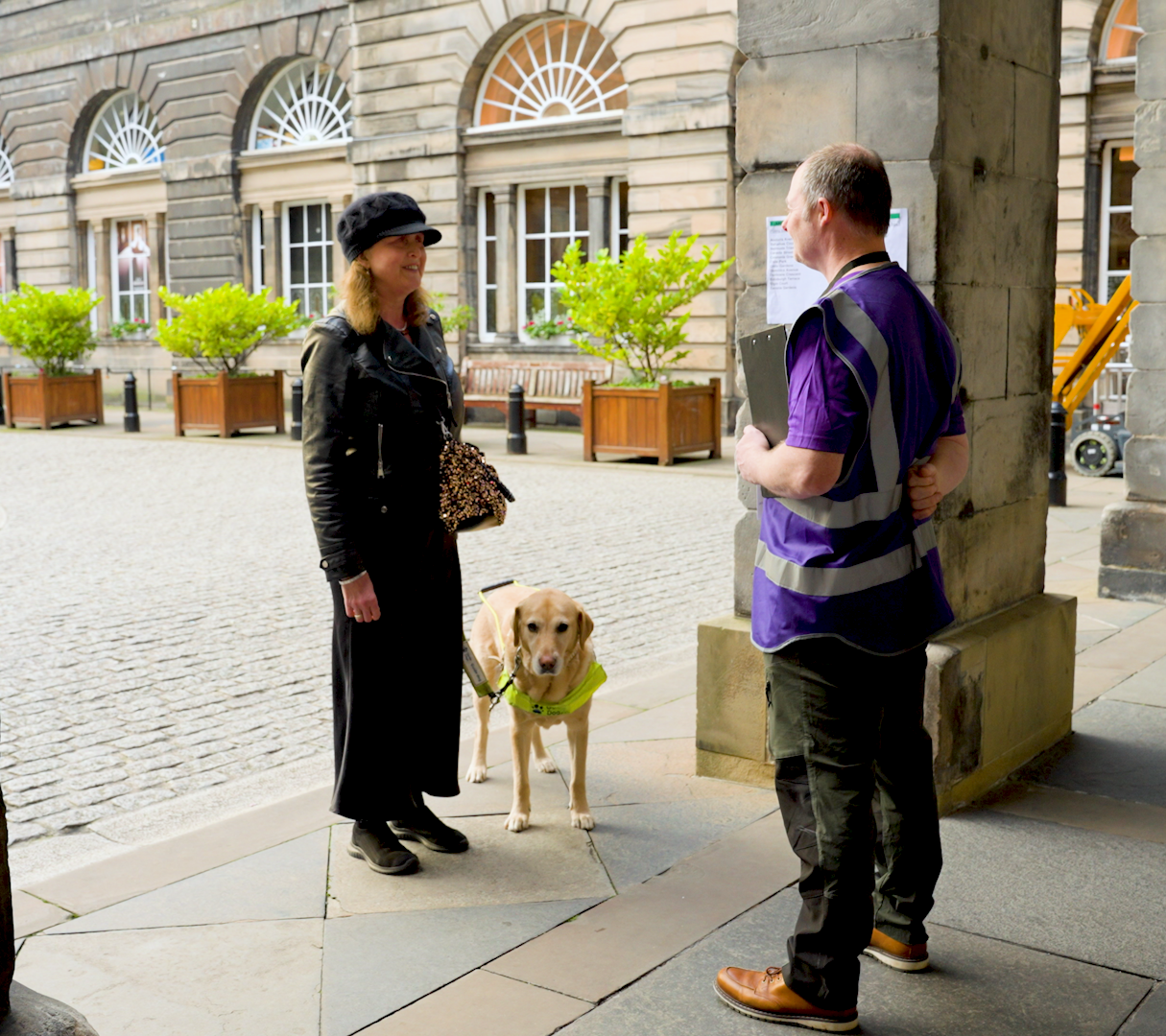
Every voter should be able to take part in elections independently, confidently and with dignity. Polling places and stations are set up to be accessible to everyone, including voters with visual impairments. 

In this video, we follow the journey of a visually impaired voter as they arrive at a polling place to and take part in the voting process. You’ll see how polling staff offer appropriate support, communicate clearly, and provide assistance in a way that respects the voter’s independence and privacy. 

From the initial welcome through to issuing ballot papers and and guiding the voter as needed, each step demonstrates how simple, thoughtful actions can make the voting experience accessible and inclusive. 

The video highlights the important role polling staff play in ensuring that ever voter is supported to cast their vote with confidence