
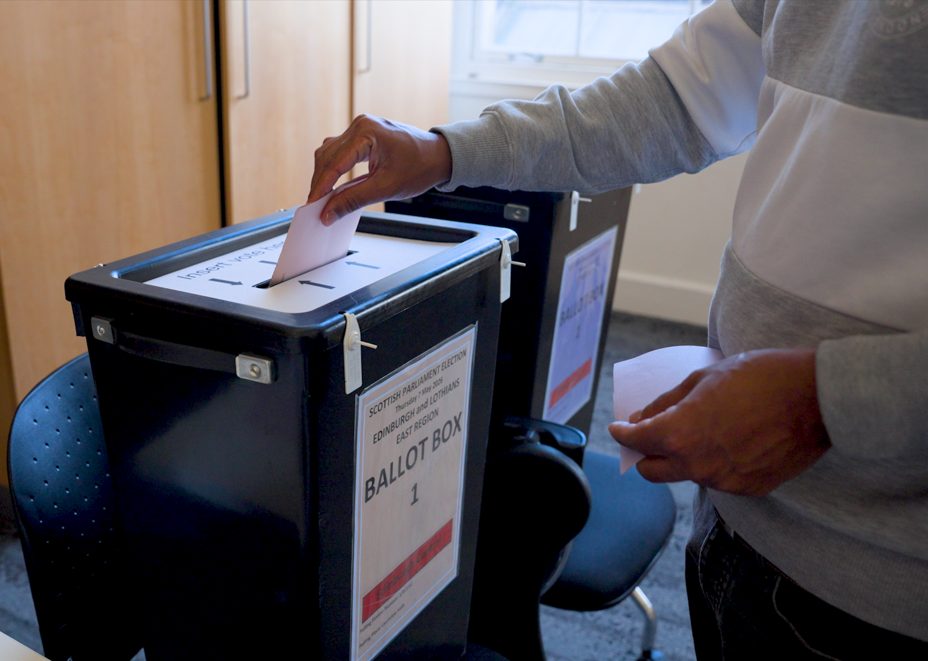
The voting process
Every election day, polling stations are places of calm, order and fairness – but behind that smooth process are trained staff making sure that every voter is treated with respect and every vote is handled correctly.
For the majority of voters who come to the polling station, the process for voting will be straightforward.
There is a 12 step voting process which must be followed for every voter in the same order.
This ensures that voters have the same experience wherever they are and whatever time they vote
Stage one - checking the voter
Greet electors as they approach the table. If there is more then one polling station in the room, make sure that electors attend the correct one.
Most electors bring their poll card with them to show to the Polling Assistant even though this is not a requirement for most voters. Offer this poll card back to the elector, we do not want poll cards. If the elector declines the poll card, the Poll Assistant should place the card in the blue crate.
Unless an elector has an anonymous entry, the Polling Assistant must:
- confirm the elector’s name and address and check that they are on the electronic register of electors and eligible to vote in the election
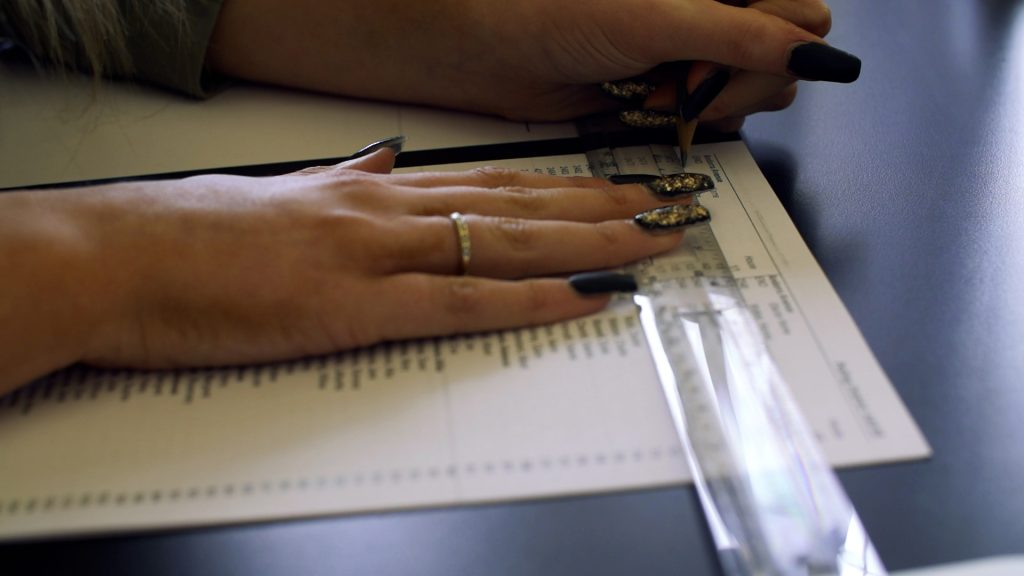
- read out the elector’s name, elector number and polling district reference from the electronic register of electors (this is a safeguard against personation)
Stage two - issuing the ballot papers
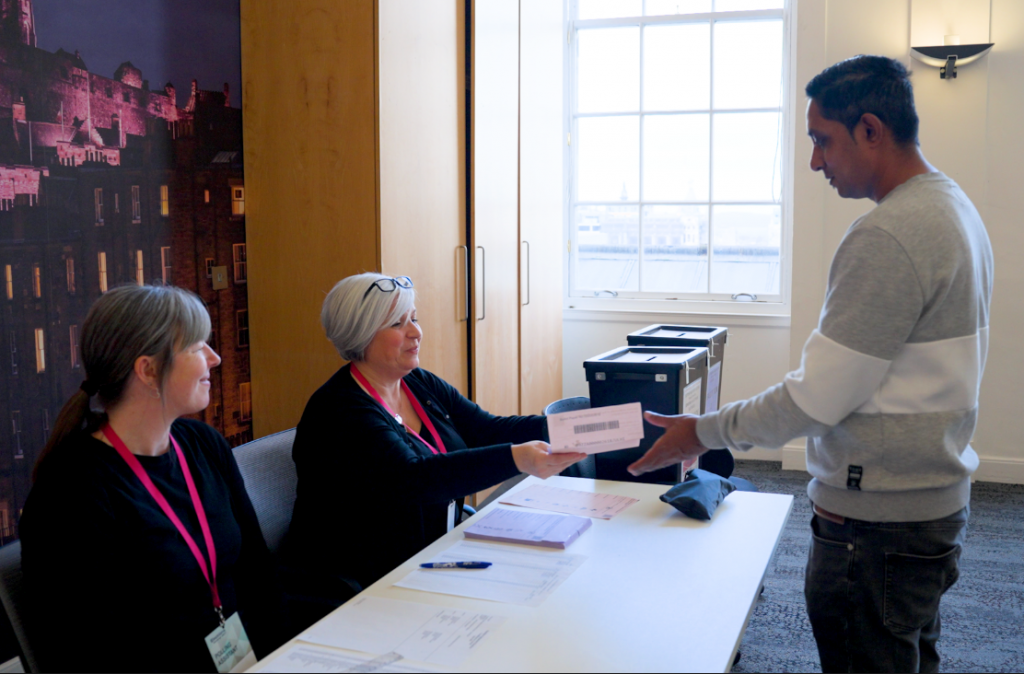
Ballot papers are numbered and should match the numbers pre-printed on the electronic corresponding number list. Ballot papers must be issued in strict numerical order starting with the lowest number in the batch.
If the elector is shown on the electronic register of electors as being eligible to vote at the election, then the voter must be issued with ballot paper.
The Presiding Officer must:
- allocate the ballot paper
- ensure that the ballot paper bear the unique identifying mark and official mark
- fold the ballot paper, then hand them to the voter unfolded so that they can see all of the candidates and parties on the paper
Do not hand over ballot papers until the elector number is recorded on the electronic corresponding number list.
Do not write anything on the ballot papers themselves.
Every elector must be given the voting instructions as they are handed their ballot paper.
Stage three - voting
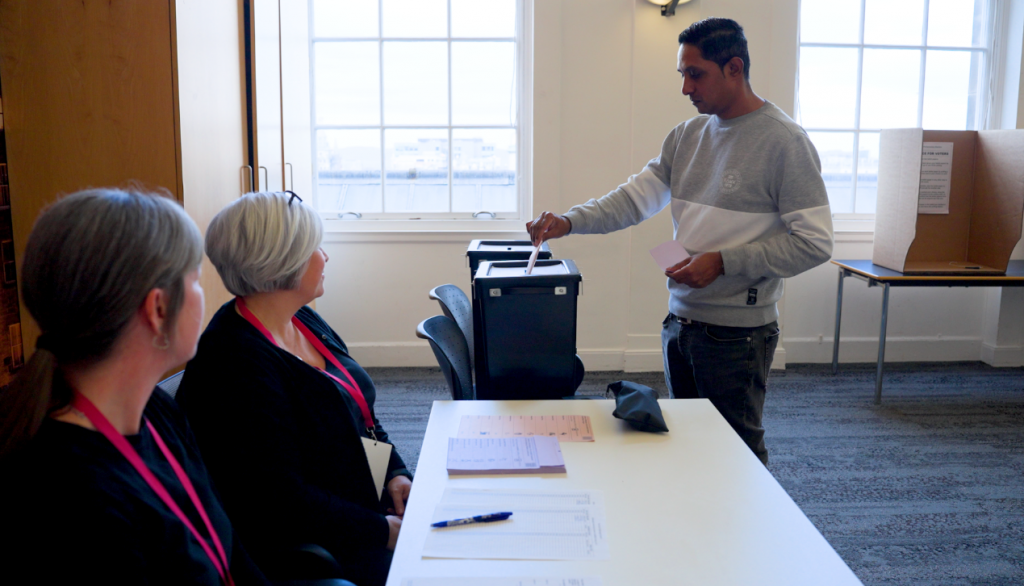
Make sure voters go to polling booths individually so that their right to a secret vote is protected. No other person is allowed to accompany a voter to a polling booth unless a voter who is disabled or unable to read has requested assistance to vote (see polling staff handbook for further information on voting with the assistance of a companion) or a voter is accompanied by a child.
The voter marks the ballot paper in the privacy of the polling booth.
Prior to the voter placing the ballot paper in the ballot box, they should fold the ballot paper and should show the ballot paper number and unique identifying number on the back of the ballot paper to the Presiding Officer.
Say ‘goodbye’ and thank the voter as they leave the polling station.
Voting process video
This video shows the voting process from the recent Scottish Parliament election and is still useful for understanding the overall process and the steps involved in issuing a ballot paper to a voter.
PLEASE NOTE: This election will be different. Instead of using paper registers, corresponding number lists and ballot paper accounts, you will be using a tablet with an electronic register to check and record voters. The corresponding number list and ballot paper account will also be completed electronically.
Use the video to understand the voting process, but follow the instructions provided in your current training for using the tablet and completing the electronic records.
Who can be present in a polling place
To ensure the integrity, transparency, and smooth operation of the voting process, only authorised individuals are permitted inside the polling place. These individuals each have a specific role in supporting the election and maintaining public confidence
You may see the following people present:
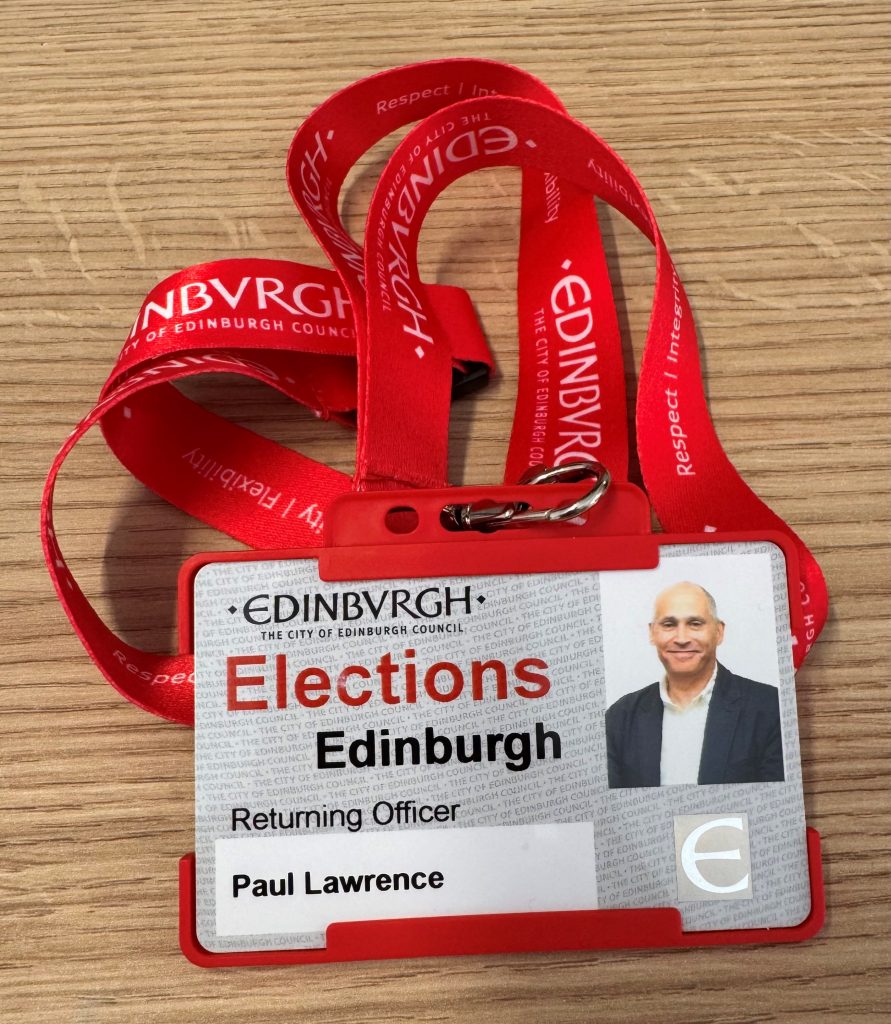
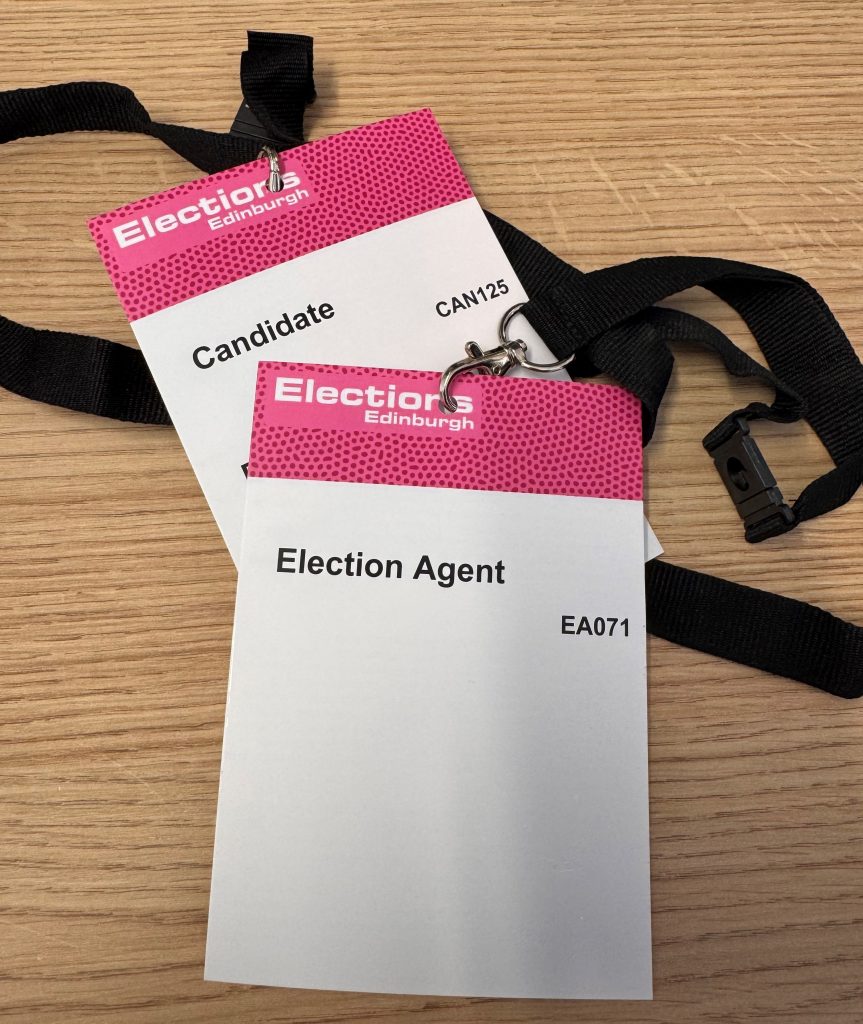
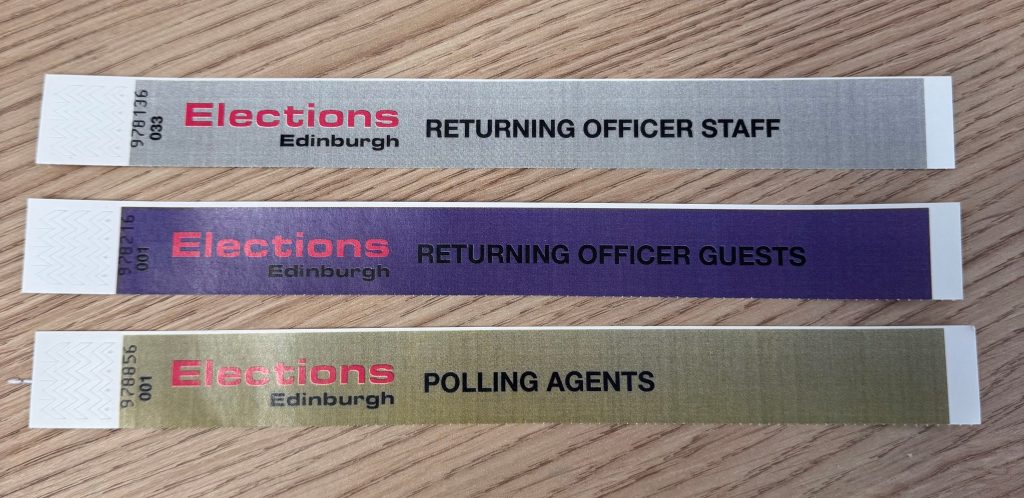
All authorised personnel inside the polling place will wear an official badge at all times. These badges clearly identify their role and confirm they have permission ro be present. For your reassurance these badges are displayed below.
Senior Presiding Officer’s should record the details of any accredited observers or commission representatives who attend at their polling place using the white List of Observers and others visiting the polling station – A1 form
The Returning Officer and his staff may visit during the course of the day. This may be to carry out duties such as delivering additional equipment, carrying out an inspection of the polling station or to collect postal ballot papers that have been handed in at the polling station by voters.
All candidates contesting the election and their election agents have the right to enter and to remain in a polling station, but they must not disrupt voting or attempt to canvass voters.
Only one candidate from a particular party list may be present at any one time.
Polling agents have the right to enter and to remain in a polling station, but they must not disrupt voting or attempt to canvass voters. All candidates contesting the election may appoint polling agents to work on behalf on polling day in polling stations. Polling agents have the right to enter and to remain in the polling station and to observe voting.
The main purpose of their appointment is to detect personation – that is, people voting illegally in the name of another voter. Not more than one polling agent may be admitted at the same time to a polling station on behalf of the same party or individual candidate.
A copy of the guidance issued to agents is included in the Senior Presiding Officer’s blue crate. Agents can ask the Presiding Officer for updates of voter numbers. This information should be provided but should not be allowed to disrupt voting.
During polling hours, polling agents in attendance should be placed at a separate area that is close enough to observe and hear the proceedings, but not in a position that would compromise the secrecy of the ballot.
Representatives of the Electoral Commission and other individuals accredited through the Commission’s official observer scheme are entitled to attend all polling station proceedings. They do not need to give advance notification of where they intend to observe, but every observer must carry photographic identification and should not be allowed to observe proceedings without this.
- ID issued to Commission representatives is pink
- ID issued to accredited observers is silver and is valid for a set period only.
The status of individuals seeking to gain entry to polling places as observers can be checked with the Elections Team. Commission representatives and accredited observers agree to abide by a code of conduct, which includes an agreement that they will not interfere with any proceedings.